Dr Susana Carvalho is an Associate Professor in Palaeoanthropology at Oxford University who specialises in tool use and material culture in non-human primates, in addition to leading the ambitious Paleo-Primate Project Gorongosa since 2015.
The Gap
Currently in anthropology, observation of primate models (e.g. chimpanzees) and study of fossils are the main areas influencing research.
The subsequent hole in our research without intermediate disciplines, is one gap that anthropologists will need to address to further our understanding of what makes us, us.
A more thorough approach would ideally capture aspects from multiple different fields, such as:
- Behaviour of extant models
- Non-tool using primates
- Biogeography
- Fossil Evidence
- Osteology of our tool using forebears
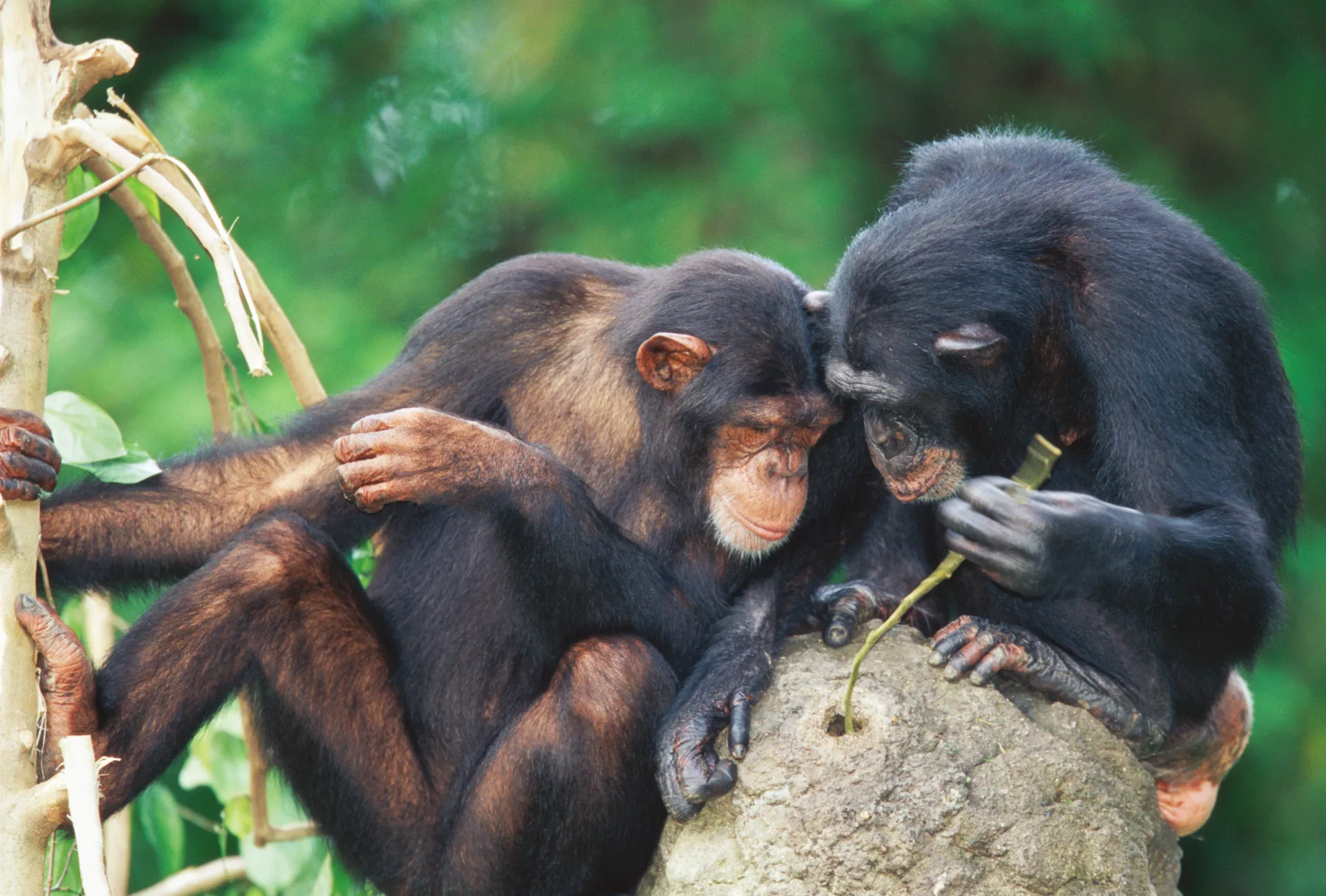
The behaviour of our close relatives is arguably the most influential field, due to their genetic proximity and behavioural similarity.
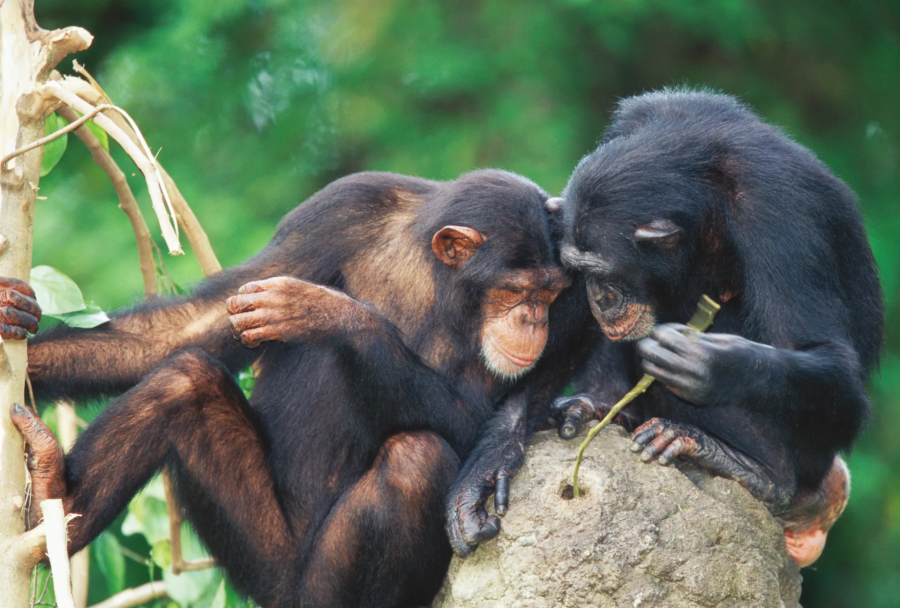
But similarly, more distant, non-tool using primates can begin to shed some light on simpler primate life, showing us where we started and how we changed.
Biogeography can give us hints and clues as to the radiation of genes, species and culture flow.
Fossil evidence is a great way to quantify how much we have changed over evolutionary time but can’t tell us much about behaviour as these don’t fossilise like bones or arrow-heads.
Finally, bones of animals killed by tool users can be an informative field in pre-modern humans as they can tell us about butchery techniques and when certain behaviours arose.
Baboon Culture
Across both the valley floor and the adjacent shoulders of Gorongosa National Park in Mozambique are roughly 200 troops of baboons.
These baboons represent a great learning opportunity for anthropologists, as they can provide an unconventional model for culture spread and occasional bipedalism across all of the highly diverse environments present in the park.
Of 28 troops surveyed, 9 of them showed a remarkable behaviour of gnawing at the bark of the Acacia robusta in order to access its nutrients.
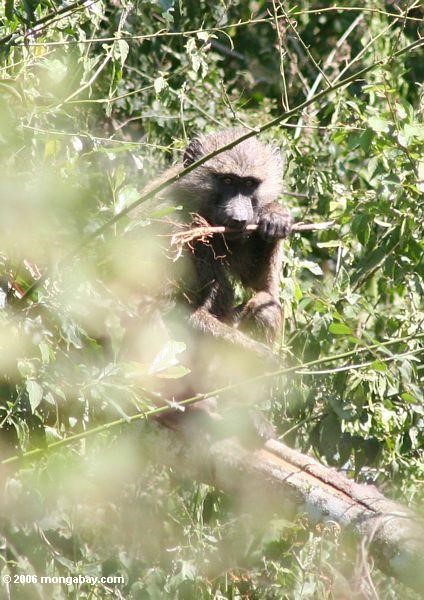
However, all of these troops are in the West of Gorongosa and Eastern troops don’t show any indication of learning it.
Although the Eastern troops still need the same nutrients, they only gnaw at it once an elephant has debarked the tree with its tusk.
There could be 2 explanations for this:
- Due to a lack of similar elephant activity on the West Shoulder, Western baboons must do it themselves, i.e. there’s no opportunity to do it any other way
- Or excitingly, it could be due to the boundary between the 2 populations where no acacia trees grow, preventing the transmission of otherwise very beneficial cultural behaviour.
Thoughts
I had previously never considered baboons as that significant a model for human evolution, due to their different social structures and genetic distance (compared to apes).
However, this talk really made me think about how much we really can learn from other primates and not just chimps and bonobos.
We need to therefore start paying far more attention to other species to learn the maximum amount.
The Future
As stated above, I had not considered other primate models to be relevant for studying human evolution and this talk has therefore opened up opportunities and ideas for research previously not considered.
 Patrick's Biology Blog