Dr Sarah Papworth is a senior lecturer in conservation biology at the Royal Holloway University of London and focusses her research mainly on the increasingly severe impacts humans have on their surrounding ecosystems.
Human Disturbance
Humans have many different impacts on monkeys and apes globally, from global warming to habitat destruction.
However, in the Amazon rainforest, researchers and local tribes have had a far more direct influence over them and their ecology.
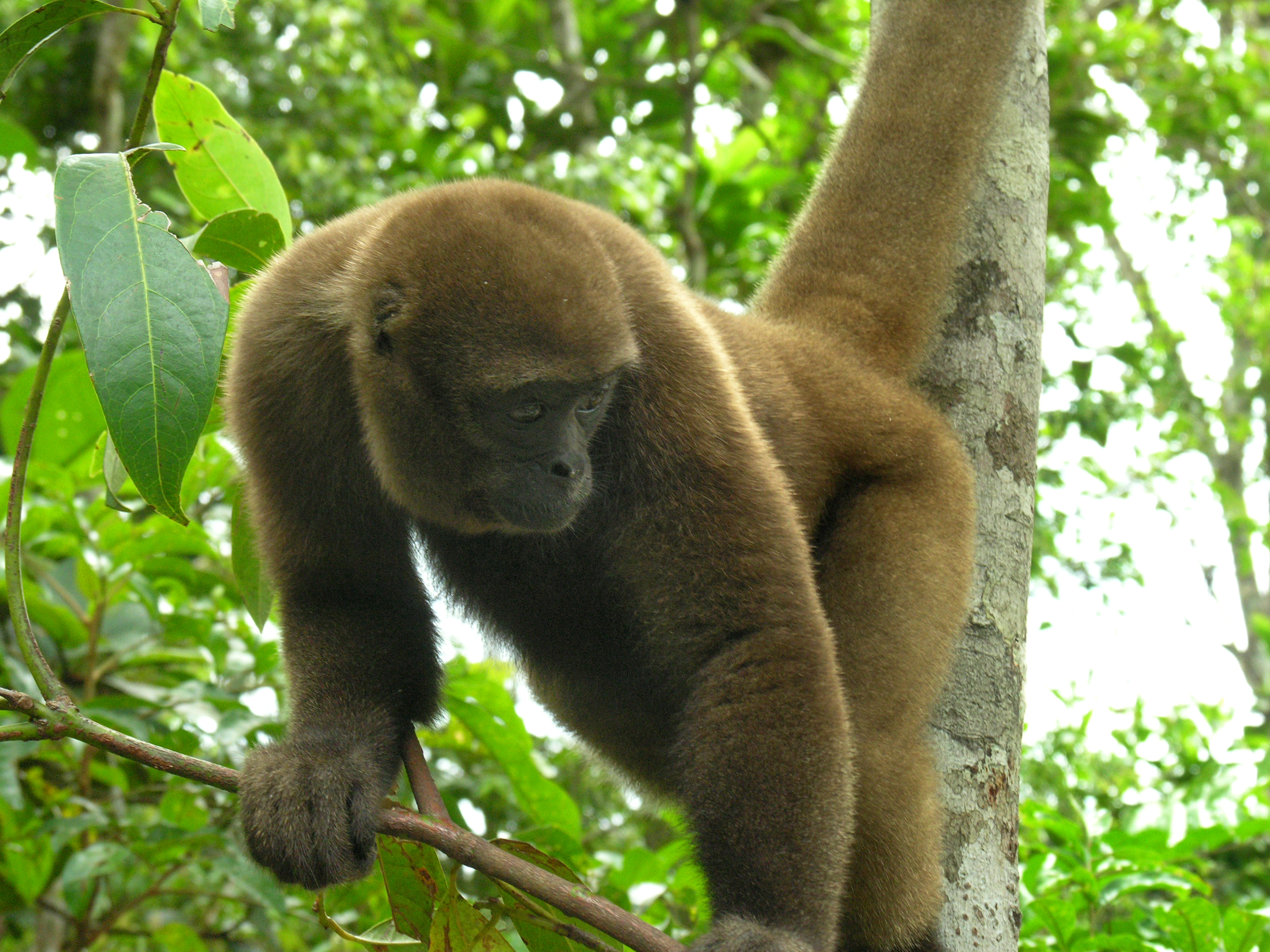
Local communities have affected them by hunting them for food (particularly the Woolly Monkey- Lagothrix lagotricha) and by simply living close by.
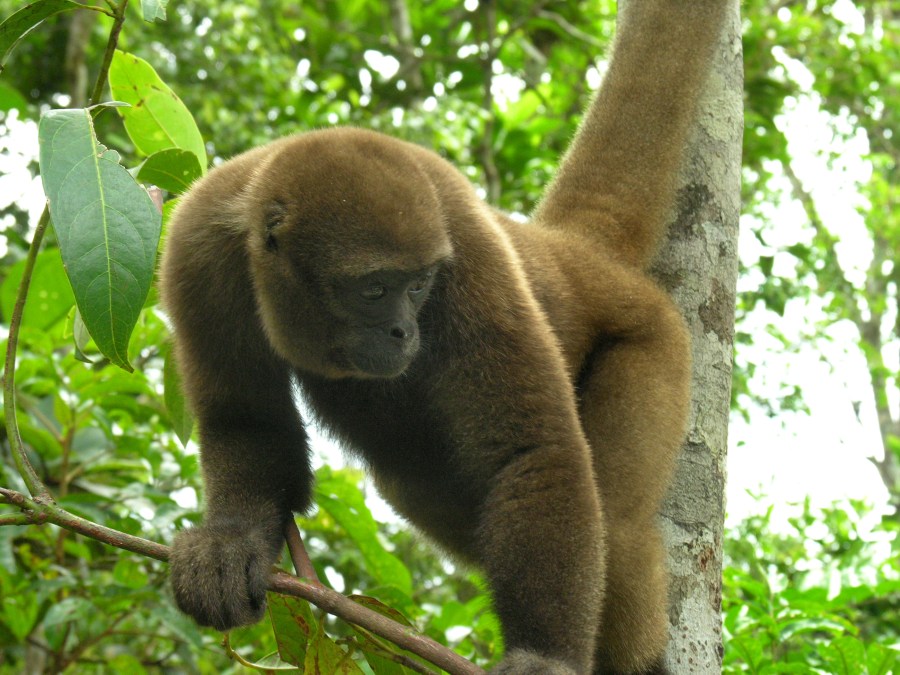
These aren’t the only negative affects we have on them though as they are also heavily influenced by the pet trade, academic research and tourism.
Stressed Monkeys
Normally most animals will respond to a predator by either running (e.g. deer) or freezing (e.g. rabbit in headlights).
Evolving more complex strategies like living in bigger groups or developing specialised signals are an alternative method for surviving predation.
But in the presence of humans, the ecology of these primates has changed to cope with each different type of human activity.
A study using 3 different types of human activity indicated how much they have had to adapt:
- A hunter (using a blowpipe) made the monkeys climb higher into the trees
- A plant gatherer (ignoring the monkey) caused them to climb but less than the hunters
- A researcher (using binoculars) induced a similar response to the plant gatherer
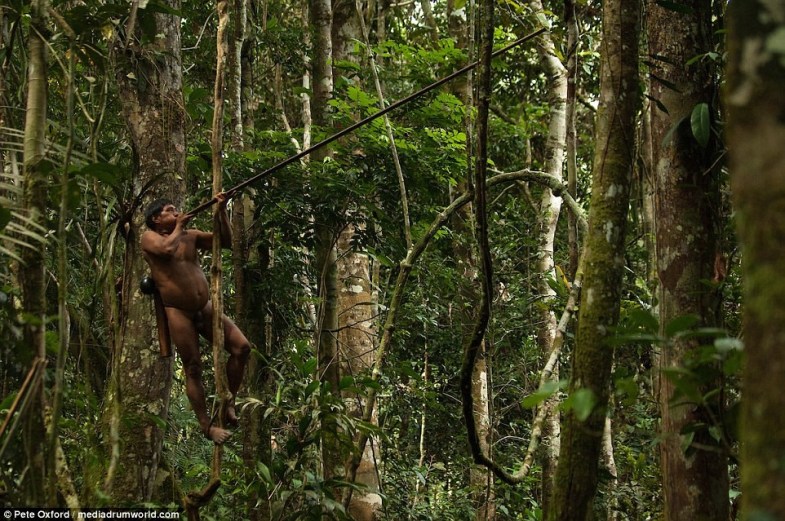
Huaorani tribesman in the Amazon rainforest hunting for monkeys using a blowpipe (Picture: Pete Oxford / mediadrumworld.com)
Thoughts
Although it is a sad fact that our influence and disturbance have necessitated such evolution in these Amazonian primates, it is no where near as big an issue as that of their habitat’s destruction.
Hunting them at least reasserts to them that humans are dangerous- it would be far worse for them to spend prolonged time near settlements where they can be killed by cars, dogs etc.
Deforestation though is unavoidable for them, their evolution has prepared them to escape into the trees, but by cutting them down we remove their home and feeding grounds.
The Future
This gives me pause for thought on the impact of a potential career in research, as although the researcher affected the subjects less than the hunters, there was still a noticeable effect on their behaviours.
Study of captive animals and primates therefore would be a better route to take in regard to reducing the bearing we have over their lives.
The results of these types of studies would obviously be of less significance than observation in the wild though, and so further research into non-invasive sampling and observational techniques need to be explored.
 Patrick's Biology Blog