Matilda Brindle is a PhD studying the evolution of the baculum (penis bone) and the origin of masturbation in primates at UCL Anthropology.
A Widespread Phenomenon
Many animals manually stimulate themselves and it is far more common a practice than one would expect, everything from birds to elephants, from horses to chimps participate.
Depending on the ecological constraints of the species determines the mechanics of how they achieve release, horses for example smack their erect penises off their stomach and chimps use ‘tools’- a tool here being a piece of freshly chewed fig.
There are several different hypotheses for why they do it and the ecological significance of it, ranging from preparation for copulation to reducing cancer risk.
Sex Prep
Many animal communities are arranged in a strict hierarchy, meaning low ranked individuals are significantly more likely to have their intercourse interrupted by the dominant males.
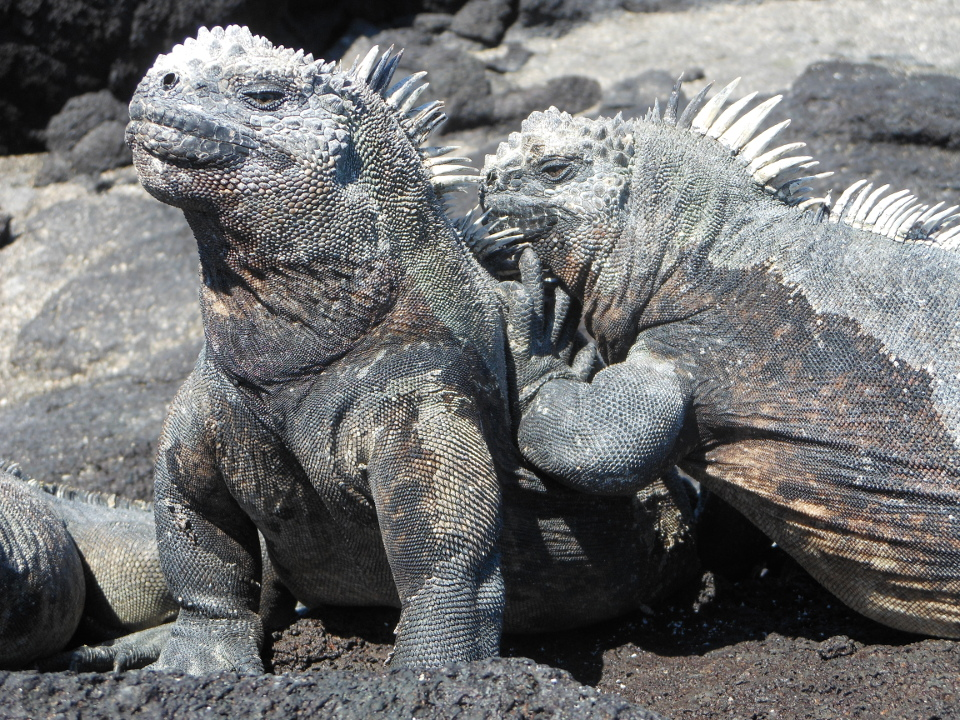
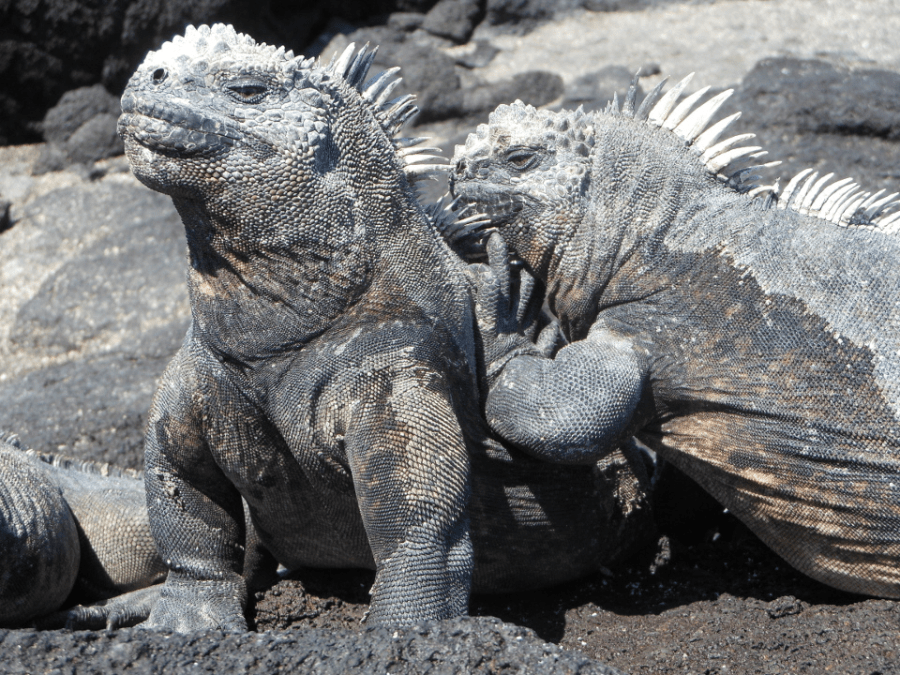
When marine iguanas mate, the males will often begin to stimulate themselves beforehand to ejaculate quicker, reducing the time in which they can be stopped.
It’s not just males who do it alone though, it is thought that female masturbation before copulation prepares the vaginal muscles to receive the male, and their orgasms ‘suck the sperm up’ giving a greater chance of fertilisation.
Housekeeping
Lower ranking males, who don’t get as many mating opportunities masturbate far more than the alpha of the group.
And as a result, their sperm are often more potent, as they are regularly replaced, meaning that they are younger and fitter.
Unlike the Alpha’s whose sperm is more likely to be older with a greater proportion having died.
In promiscuous mating systems, infections and parasites can spread rapidly so high grooming rates are often seen; some believe, masturbation is simply an extension of this and simply for hygienic purposes.
Thoughts
This was an odd lecture to sit through, although very interesting to see some of the ecological reasons behind the activity.
It was fascinating to look at these lower, basal animals and to see what motivates them, and in turn how that has changed over our evolution and how it’s affected us.
Especially with the primates closest to us, it’s cool to look at how this is just an extension of play fighting and how they use their intelligence and ability to use tools to achieve something considered so taboo to us.
The Future
This project just goes to prove how weird PhD projects can get, and the scope that one can cover.
It has also given me a more realistic view of what a potential future in academia would entail as the guest lecture iterated just how much theoretical and desk work were involved before she could go anywhere near the field.
 Patrick's Biology Blog